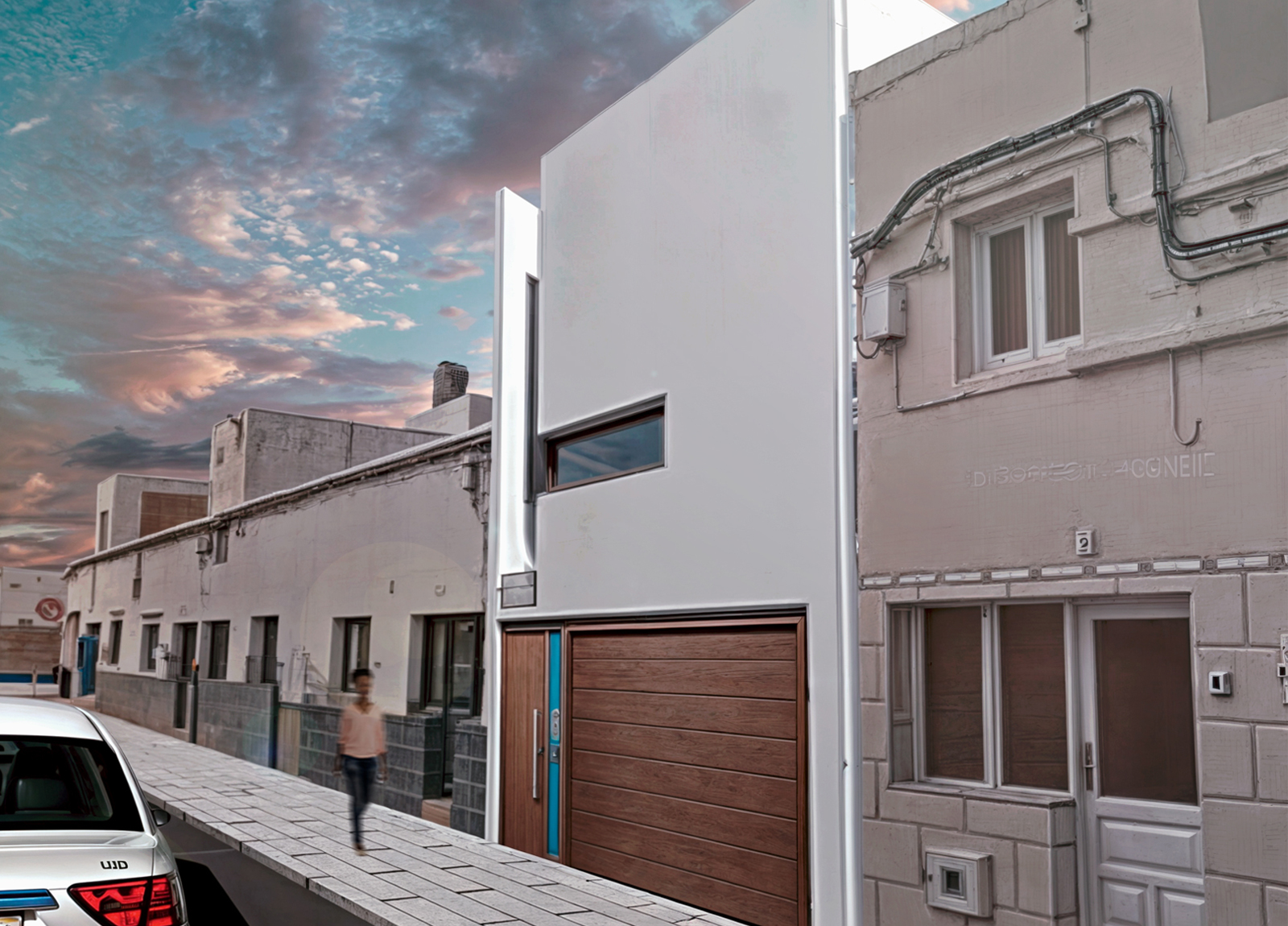
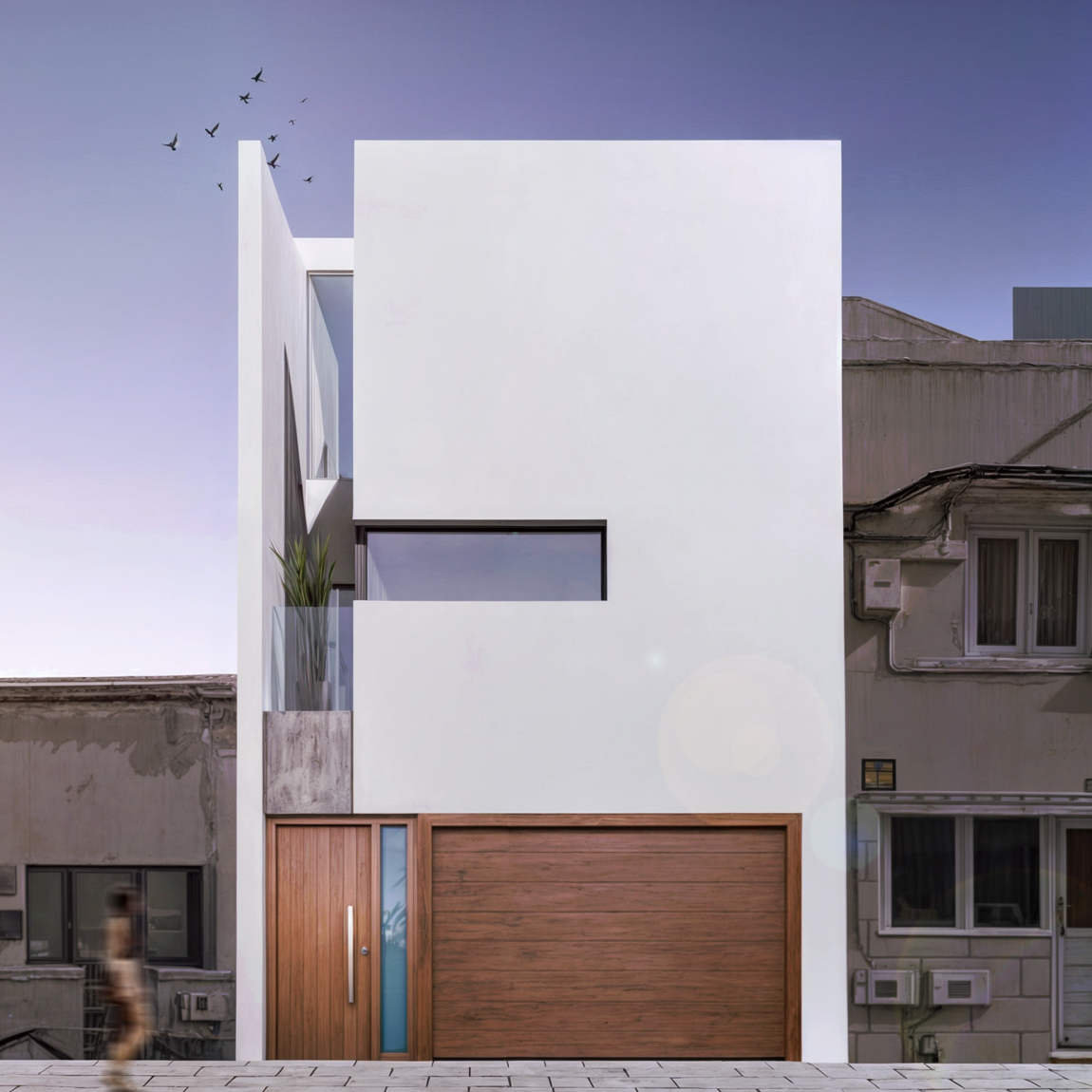
Architecture presents itself as an exercise in sobriety and balance, where every line is a serene gesture and the volume, a declaration of intent. In a suburban environment, where the everyday coexists with silence, the façade emerges as a manifesto of simplicity and purity, embracing a minimalist composition that dialogues discreetly with the surroundings.
The rationalist lines defining it do not aim to impose themselves but to integrate into the suburban landscape elegantly. The smooth, almost silent surface is articulated through measured proportions that invite a slow reading, where every detail is a conscious decision. The façade, in its apparent simplicity, conceals a discreet sophistication, revealing a profound respect for the space and its environment.
On one side of the façade, a crack disrupts the geometric perfection. This break, far from being an interruption, becomes the soul of the composition. Like a poetic wound, this vertical opening allows light to penetrate the interior of the house, creating an unexpected connection between the exterior and interior.
Through this crack, the sun finds its way into the deeper spaces, flooding them with soft, changing light. The crack, though minimal, transforms the space, not just as a functional element, but as an invitation to contemplation. The light that passes through this invisible threshold serves as a constant reminder of the outside world, the passage of time, and the connection with the sky and the environment.